


Maxillofacial Trauma
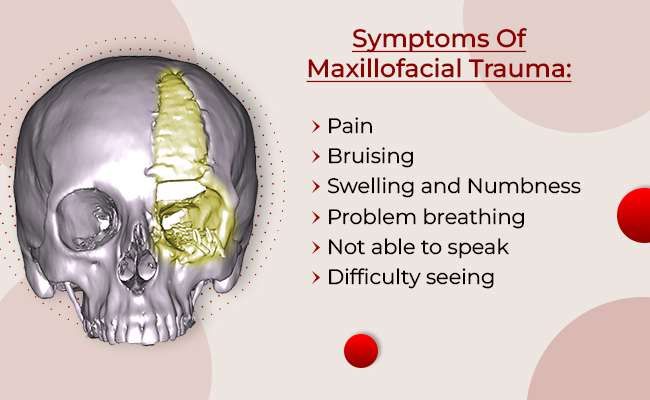
There are several possible causes of facial trauma. Motor vehicle accidents, accidental falls, sports injuries, interpersonal violence, dog bites and work-related injuries account for many. Types of facial injuries can range from injuries of teeth, to extremely severe injuries of the skin and bones of the face. Typically, facial injuries are classified as either soft tissue injuries (skin and gums), bone injuries (fractures), or injuries to special regions (such as the eyes, facial nerves or the salivary glands).
Soft Tissue Injuries of the Maxillofacial Region
Oral and Maxillofacial Surgeons are well trained and proficient at diagnosing and treating facial lacerations as well as intra oral lacerations.
Bone Injuries of the Maxillofacial Region
Fractures of the bones of the face are increasingly common, and may affect the patient’s vision, their ability to breathe, speak, and perhaps even swallow. Bones that are broken in the face, such as the lower jaw, upper jaw, palate, cheekbones, and eye sockets are best treated and stabilized by the surgical placement of small “plates and screws” at the involved site. The relatively recent development and use of “rigid fixation” has profoundly improved the recovery period for many patients by allowing them to return to normal function more quickly.
The treatment of facial fractures should be accomplished in a thorough and predictable manner. Most importantly, the patient’s facial appearance should be minimally affected. An attempt at accessing the facial bones through the fewest incisions necessary is always made. At the same time, the incisions that become necessary are designed to be small and, whenever possible, are placed so that the resultant scar is “hidden”.